
Thirty years before McDonald’s introduced Supersizing, and thirteen years before the Marx Big Wheel tricycle; Ford introduced their amply sized Jet-Tube taillamps.
Continue readingThirty years before McDonald’s introduced Supersizing, and thirteen years before the Marx Big Wheel tricycle; Ford introduced their amply sized Jet-Tube taillamps.
Continue reading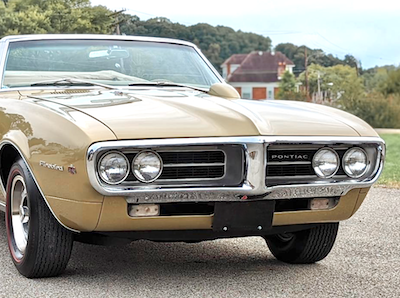
Many fashion trends were born in the 1960s, one of which was the Loop Bumper, a wraparound unit physically and stylistically incorporating the headlamps and grille.
Continue reading
From the 1920s to the 1990s, when you entered most General Motors cars you first had to step over a turquoise-enameled Napoleonic coach; the hallmark of a Body by Fisher. Fisher supplied automobile bodies for GM for over eight decades.
Continue reading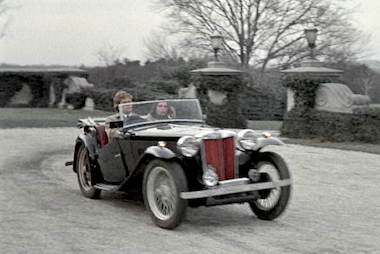
In the first of a nine-part series, yours truly sits down with Koop Kooper of Cocktail Nation radio to discuss seminal post-war sporting cars. This month; the MG TC.

Like the paradox of Schrödinger’s Cat, simultaneously alive and dead, the Oldsmobile division of General Motors introduced a wheel option for their 1964 Starfire and Jetstar I models that was both real and unreal.
Continue reading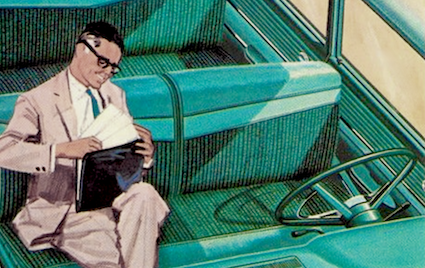
Is fabric automotive upholstery finally ready for a triumphant return after decades of leather fetishism? I recently received word that the new BMW 7-Series is available with woven textile upholstery; not just any fabric, but cashmere.
Continue reading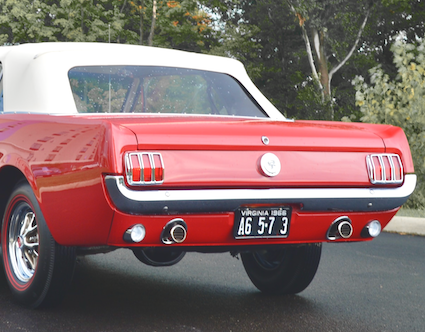
It’s hard not to notice how exhaust tips have evolved into fetish items over the past decade-and-a-half. Overly stylized and comically oversized, they have become carbuncles defacing the stern of the majority of mid and upper-range vehicles currently on offer.
Continue reading
Metallic automotive paint finishes, around since the 1920s, became extremely popular in the U.S. during the 1960s. The then-new thermoplastic acrylic lacquers made an ideal showcase for metallic finishes as their low application viscosity allowed time for a majority of the aluminum flakes to align themselves relatively parallel to the surface before the paint began drying. This provided increased reflectivity compared to earlier efforts. The result was metallic paints with nearly the same visual appeal as todays, lacking only the extra sheen and depth of a clear top coat.
Continue reading
It could be argued that the first automobile designs to seriously address efficient space utilization were the prewar Fiat Topolino, and the postwar Fiat 600 and Citroën DS; both the latter introduced in 1955.
Continue readingJames Kraus
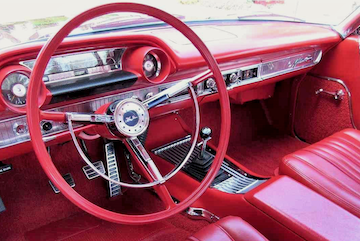
Stick (noun). Any of various implements resembling a stick in shape, origin, or use: such as the gearshift lever of an automobile.
Since time immemorial, American enthusiasts have declared their love of, or mastery over, a mysterious object called a “stick shift.” It’s a strange term. The fact is, since the demise of the Ford Model T and its pedal-operated planetary gearbox, the vast majority of cars (until recently) have featured transmissions whose gears or driving ranges are selected by means of a “stick” usually mounted on the floor or steering column.
Continue readingJames Kraus
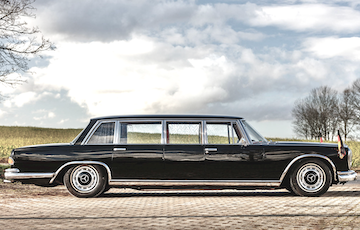
The president of France was recently issued a rather banal stretched DS 7 Crossback Elysée. Lacking the charm and dignity of the its immediate predecessors, the SM and DS Presidentielles; the Elysée further challenges the dignity of its occupants by sporting utilitarian roof rails, as if members of the Groupe de sécurité de la présidence de la République might occasionally climb aboard step stools in order to secure the president’s luggage and/or shopping bags atop the roof.
Continue readingJames Kraus

The Transistor has been called the most important invention of the 20th century and the key to the dawn of the information age.
Continue reading
James Kraus
The heyday of Pontiac neatly coincides with the 1960-1967 period most celebrated here at Auto Universum. Their glory days began with the formation of a young new team of executives who were granted control of the division in the late fifties.
Continue readingJames Kraus
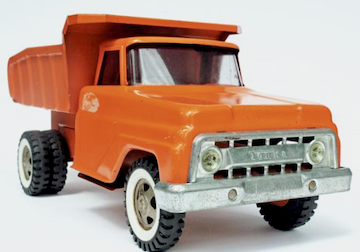
In the Spring of 1969, as Aquarius/Let The Sunshine In was dominating the pop charts, Chrysler began officially offering a trio of bright, saturated High Impact Colors. Although designed for their performance lineup of Barracudas, Chargers, Coronets, GTXs and Road Runners, the vivid colours were actually available across the board on all Chryslers, Dodges and Plymouths.
The origin of High Impact Colors goes back to 1968 and a Los Angeles Chrysler-Plymouth Regional Sales Manager by the name of Jock Fearer.
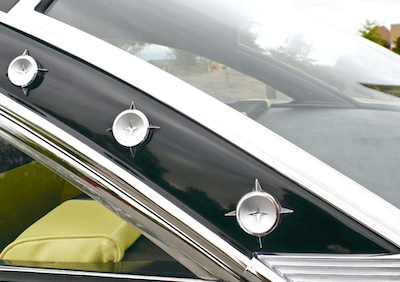
Auto Universum has added an exciting new Page: 1960s Star Designs. You can access it here, or hit its permanent tab on the menu bar above.
James Kraus
A Flathead engine, with its valves ensconced in the block, was still a competitive design in the low-compression, low-speed engines of the prewar era. That changed and changed quickly with higher-octane fuels allowing for higher compression ratios, and improved metallurgy and shorter-stroke engine designs enabling considerably higher crankshaft speeds.
The large-volume combustion chambers and upside-down valve placement required in a flathead engine conspired to limit the compression ratio to around 8.4:1, after which power and fuel efficiency both decreased.
Continue readingJames Kraus
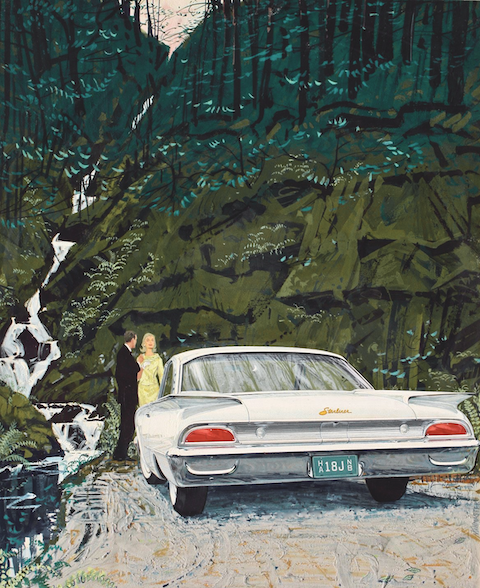
1960 Ford Starliner in Corinthian White at Manganese Falls, Copper Harbor Michigan.
A resident artist at LaDriere Studios in Detroit from 1953 through 1963, John Killmaster’s mature style corresponds aptly with the Jet Age aesthetic of Auto Universum.
John often created entire pieces, but his forte was producing lush, painterly backgrounds that flatteringly framed the selected automobiles. Continue reading

1966 Chevrolet Turbo Titan III Prototype and 2020 Nikola Electric Truck Concept.
James Kraus

First generation Porsche 911 and Chevrolet Corvette Sting Ray.
In the first chapter of Timeless vs Of Its Time, we examined two American luxury cars, the 1961 Cadillac and Continental. Now we look at two sporting cars from the 1960s, The Corvette Sting Ray and the Porsche 911. The Sting Ray went on sale in the autumn of 1962, while the new Porsche made its public debut at the Frankfurt International Motor Show just one year later. Continue reading
James Kraus

1962 Mercedes-Benz 220 SE Coupé in Dark Maroon over Cream.
Two-tone automotive paint dates back to what is generally considered to be the first production car, the 1886 Benz Patent-Motorwagen. The second one built was finished in green with a bright red fully-exposed engine mounted over the rear axle. Continue reading
 Auto Universum